
Automated Pupillometry
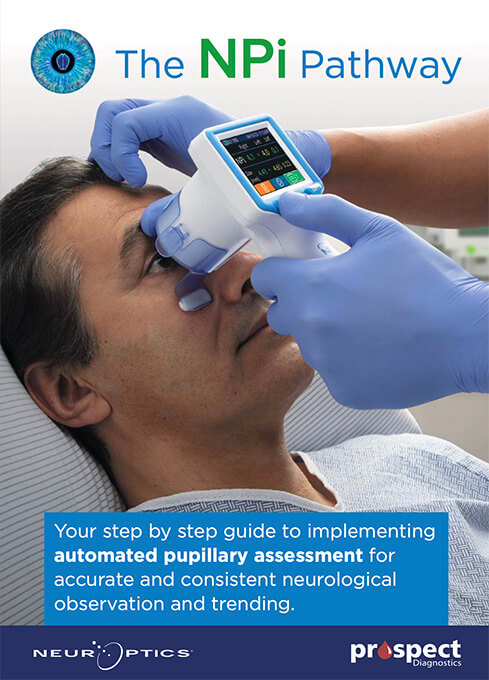
Automated pupillometry is a non-invasive, objective method for measuring pupil size and reactivity using a hand held optical scanner. It provides quantitative data on the full pupillary light reflex, which is used to generate a standardised score known as the Neurological Pupil Index (NPi). This technology eliminates the subjectivity and variability of manual pupillary exams and is widely used in neurocritical care for monitoring patients with neurological worsening, predicting outcomes, and guiding clinical interventions.
- An automated pupillometer uses a handheld, infrared optical scanner to objectively measure the pupil’s reaction to light.
- It captures and analyses the pupillary light reflex to provide precise, quantitative data on pupil size, constriction velocity, latency, and dilation velocity.
- This data is used to generate a standardised score, called the Neurological Pupil Index (NPi), which provides a numeric expression of pupil reactivity.
- Objectivity and accuracy: It eliminates the subjectivity and observer variability associated with manual, penlight-based pupillary examinations, providing more consistent and reproducible measurements.
- Quantitative data: It provides detailed, quantitative data on pupil reactivity, allowing for objective tracking of changes over time.
- Improved patient management: The objective data helps in the early detection of neurological changes and can be used for dynamic prognostication, guiding clinical interventions, and monitoring patient response to treatment.
- Standardisation: It provides a standardised assessment across different clinical settings, improving the consistency of pupil monitoring.
- Neurological monitoring: Commonly used to monitor patients in neurological and neurocritical care settings
- Prognostication: The measurements can help predict outcomes for patients with neurological worsening.
- Can be used for research in areas such as anesthesiology & pain, autonomic neuroscience, drug impairment & addiction studies, endocrinology/diabetes, psychiatry, sleep science, pharmacology, and more.
- Pre-operative and vision-surgery planning: Measuring baseline pupil size under different light conditions helps optimise choices for premium intraocular lenses (IOLs) in refractive surgery, and avoid night-vision problems (e.g. glare or halos) after surgery
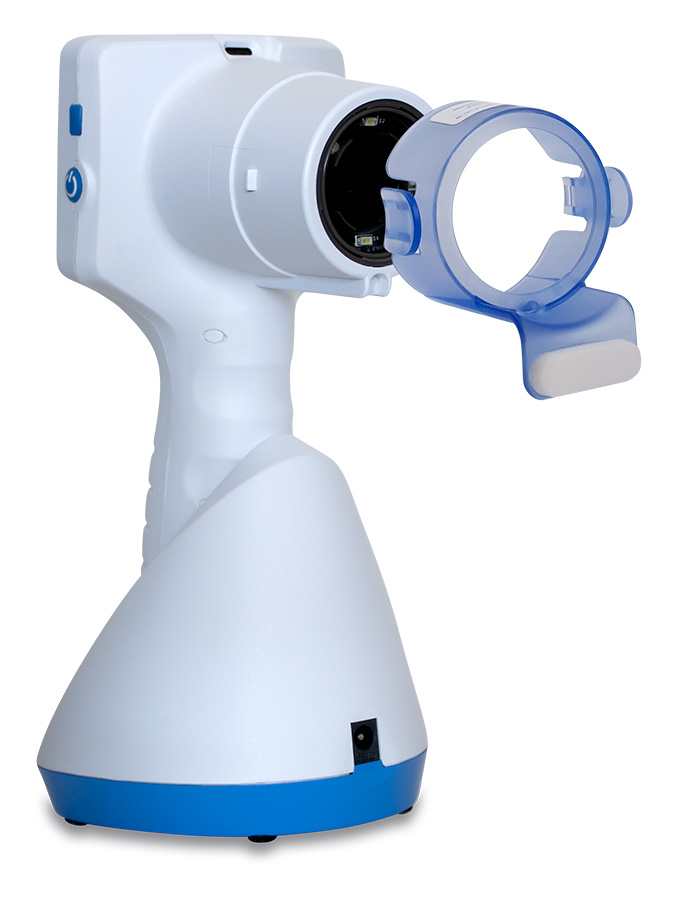
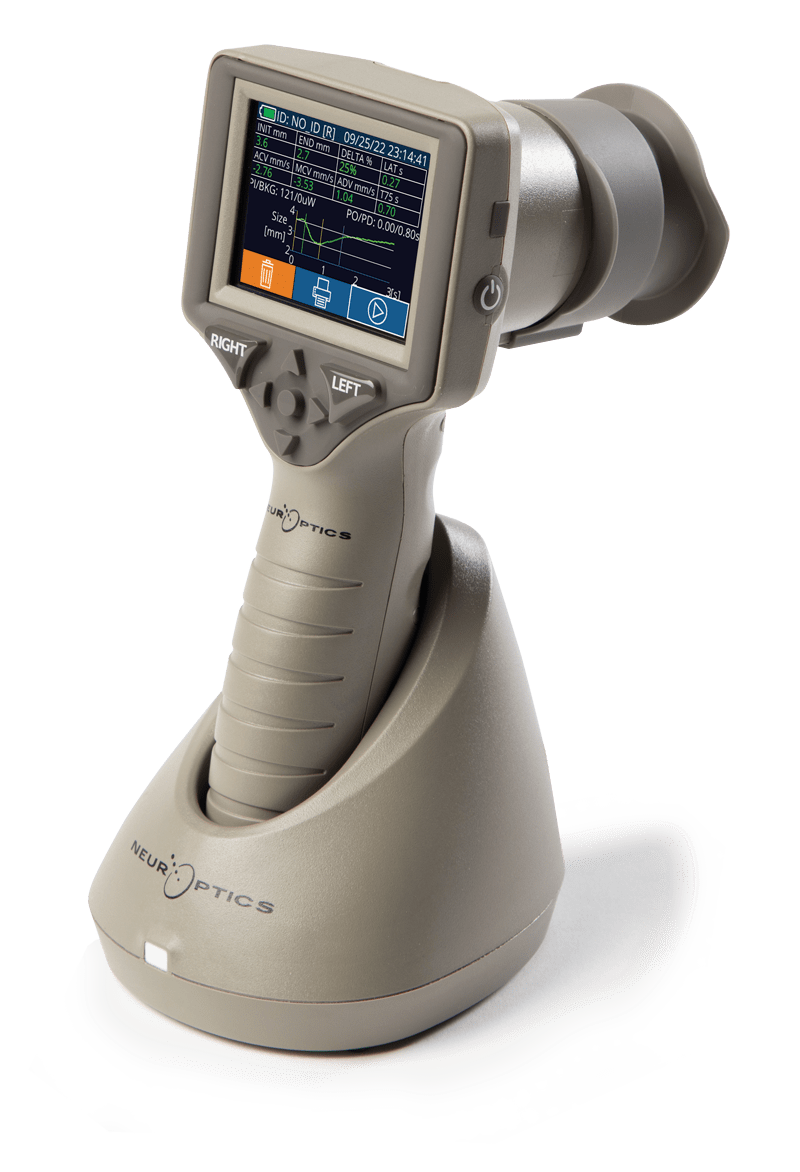
NeurOptics® Pupillometer NPi®-300 with SmartGuard®
The NeurOptics® Smart Approach to Pupillary Evaluation, a completely automated system from patient admission to discharge.